Aug 22, 2010

The Dave Pike Set - Noisy Silence Gentle Noise

barabara sounds sez:

A lot of people rate the early work by Dave Pike, but for me it's the MPS era that I listen to. Especially this album. The track everyone knows is Mathar, classic sitar jazz courtesy of sidekick Volker Kriegel. But there's also a lot of excellent vibes/guitar interaction throughout, like on the title track. Great vibes, in both/all senses of the word. Did I say classic? Yes, well maybe it is...


amazon sez:

Pike's move to Europe and tenure at MPS/Saba records produced some of the most original jazz of the period. With the collaboration of Voker Kriegel (guitar), J.A. Rettenbacher (acoustic and electric bass), and Peter Baumeister (drums), he formed the Dave Pike Set. The group recorded 6 brilliant records from 1969-1972 that spanned the gamut from funky grooves to free, textural territory. The group, though short-lived, created a unique identity and textural palette. Kriegel's compositional and instrumental (playing acoustic, classical, and

electric guitar as well as sitar) contributions to the group helped set the Dave Pike Set's sound apart, organically incorporating influences from jazz, soul jazz, psychedelia, avant garde music, and world (Indian, Brazilian, Latin and Middle Eastern sounds) music.


reminded by Simon's comment...

Mathar was the source of the sample taken by Towa Tei for his 'Son of Bambi'. More here...


Aug 12, 2010

David T Walker - Press On

dusty sez:
Warmly chromatic and nicely tripped out guitar work from David T Walker – laid out over some great larger arrangements from the legendary Jerry Peters! The style here is a great blend of studio jazz and soul – a completely new recasting of the role of the guitarist in the soul instrumental field, and one that's clearly inspired by the styles of CTI and Kudu, yet a bit more straight ahead overall. Walker's guitar is amazing throughout – laidback, yet always filled with a strong sense of "voice" that really comes through – and other players on the set include longtime studio associates, like Harvey Mason on drums, Ernie Watts on alto, Tom Scott on tenor, and Oscar Brasher on trumpet. Titles are mostly covers, but done in really great versions – and tunes include "If You Let Me", "Superstition", "Work To Do", "Brother, Brother", "Press On", "Didn't I Blow Your Mind", and "If That's The Way You Feel".

barabara sounds sez:
Probably my favorite album of all from David T Walker, this funky joint from 1973 sees him lay down a fine groove from start to finish. A great cover too, with those sepia photos. Mr David T (as he's known over here) still visits Japan just about every year – and he's still playing with Clarence McDonald. This was the set list for last year's Xmas shows (check down the bottom of that page for English titles).


Aug 5, 2010

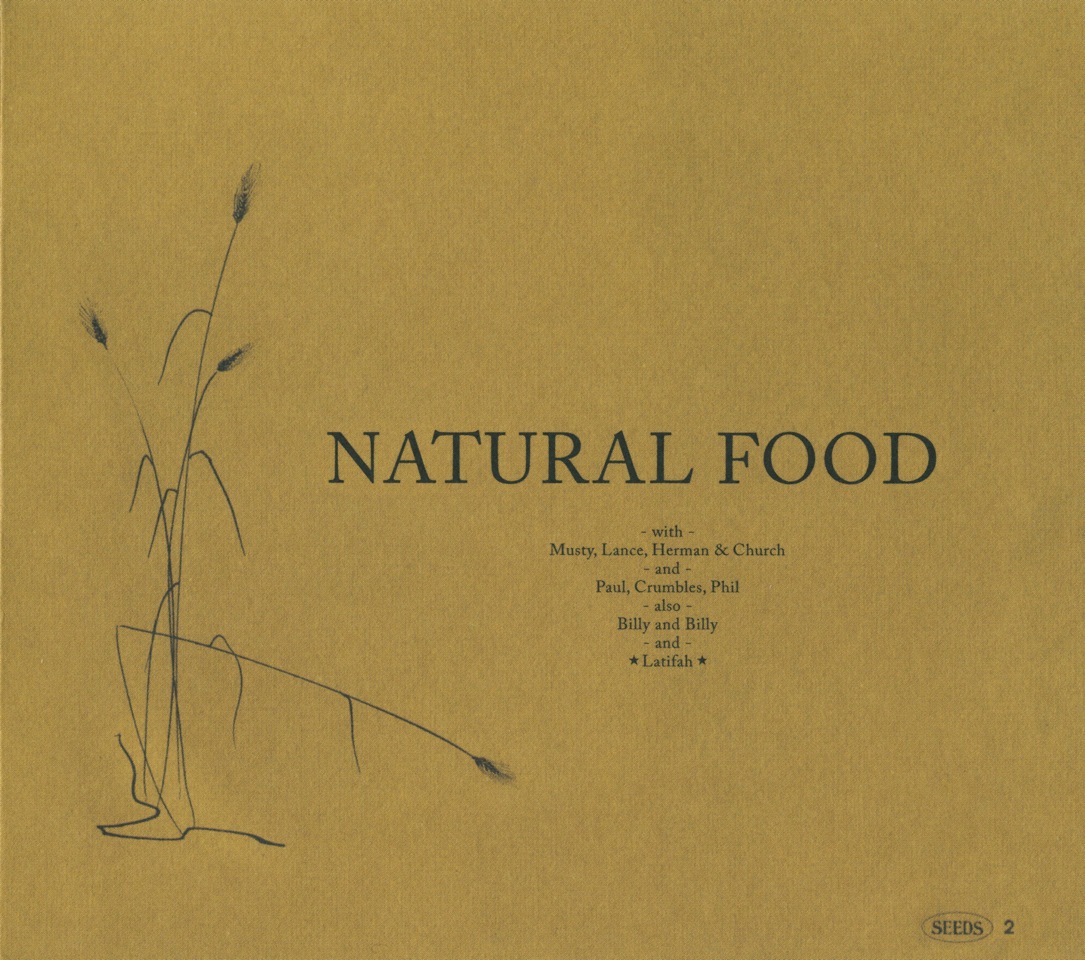
Natural Food - Natural Food

barabara sounds sez:
Back in the early 70s the barriers were less rigid, and jazz cross-pollinated readily with blues and folk and rock. When it worked well, the results were righteous — as on this fine set which briefly saw the light of day on a limited edition private pressing. This rip is from the CD reissue: because it's still in print, I'll only keep the link up for a limited time. When it's gone, you'll just have to get it here...

AMG (Thom Jurek) sez:
Natural Food was one of those bands that sprung up around Boston in the late 1960s and early '70s in the latter squalls of hippiedom
... This album is a blues record like no other blues record that has ever been cut, because it was essentially made by group of blues players, jazz players, rock players, and a vocalist who wasn't a formal singer. It also features [
pianist and composer Mait] Edey's Fender Rhodes in the forefront, making it funky as all get out...

The players in this band are perhaps not well known, but have interesting pedigrees nonetheless: saxophonist (one of the two here, the other is Billy Thompson) Bill Hurd is an award winning player and already was by then; he is also Charles Lloyd's nephew. Those who follow jazz guitar closely will know guitarist Lance Gunderson, who by this time had already performed with Joe Henderson and Chico Hamilton. Bassist Phil Morrison was a veteran of T-Bone Walker's road band; the other bassist (they alternate), Charlie LaChapelle, was part of Hal Galper's band. There is this other guy who you may know as well. They called him John Crumbles back then; he is known by his real name now: John Abercrombie, and he guested on a track here, and there's also drummer Craig Herndon, who's part of the Heikki Sarmanto quartet! The third guitarist was Paul Lenart. As far as we know, singer Brenda "Latifah" James hasn't been heard from since her excellent performances on three of these tunes.

Read the full version of Thom Jurek's excellent review here...

Jul 25, 2010

Mahalia Jackson - Newport 1958

barabara sounds sez:
I don't listen to a whole lot of gospel, virtually none it has to be said. In fact, I have more sufi or Buddhist music in my record stacks than gospel. But this is the one exception that proves the rule. Maybe it's because I saw the classic Jazz on a Summer's Day documentary at a highly impressionable age... Just the opening does it for me: "It is Sunday and it's time for the world's greatest gospel singer..." Damn right it is. Turn up the volume, especially on 'Didn't it rain.' Actually, no matter what day of the week, this really is an all-time classic.

amazon sez:
It was 1958 at the Newport Jazz Festival, and the announcer said it all: "Ladies and gentlemen... the World's Greatest Gospel Singer, Miss Mahalia Jackson." And, with that all-too-appropriate introduction, Jackson broke into a stirring rendition of "An Evening Prayer" that set the tone for a classic performance. Over the course of her 45-minute set, she performed pop-tinged numbers ("Didn't It Rain"), a few trad tunes ("I'm Going to Live the Life I Sing About in My Song"), and songs immersed with soul ("Keep Your Hand on the Plow"). On all of these numbers, Jackson's voice rang loud and clear, backed simply by piano and organ. Recorded at a time when her longtime fans were questioning her increasing fame and popularity, the "Queen of Gospel" proved shiningly, once again, that she still knew how to use her God-given gift of voice.

Jul 18, 2010

Charles Mingus - Mingus At Carnegie Hall

barabara sounds sez:

The great great Mingus jamming live with an all-star cast featuring five — count them — top sax players (Hamiet Bluiett was in the Mingus band at the time; the other four were guests), not to mention the greatest stritch player that ever lived... Enjoy it! You can tell the musicians themselves did!


AMG sez:

Atlantic Records, somewhat perversely, chose to release two performances from this concert that had the strongest aura of "jam session" about them. But the show included a solid opening set by the working band of the time, as well as a freer finale, all of which remains unissued. This is a fun 45 minutes, particularly for the jovial interplay between saxophonists Kirk and Adams, but in its released form, only hints at the strength of The Jazz Workshop in 1974.


an amazon reviewer sez:

This live recording captures the essence of Mingus' larger band excursions and is somewhat more improvised than many of his other larger band dates. For one the inclusion of Hamiet Bluiett adds a free sense that is not usually evident in a Mingus recording. Also the ever changing Rahsaan Roland Kirk equally adds color to this Mingus' lineup. The band takes Duke Ellingtons "C Jam Blues" and changes the whole texture and face of the song turning it into a partially improvised tour de force that features Bluietts baritone sax work and kirks tenor and stritch. The other tune is a masterfull take on "Perdido" and it is equally exciting. The amazing thing about this date is Mingus' ability to assemble the best players in jazz in one band and come up with something as good as this. I only wish that I had been there to witness this incredible live performance.


Track listing:

SIde 1. C Jam Blues (24:32)

Side 2. Perdido (21:53)


Personnel:

Charles Mingus bass; Georges Adams tenor sax; Hamiet Bluiett baritone sax; Don Pullen piano; Dannie Richmond drums

Guest artists: Jon Faddis trumpet; John Handy alto and tenor sax; Rahsaan Roland Kirk tenor sax, stritch; Charles McPherson alto sax


Recorded January 19, 1974 at Carnegie Hall, NYC


Jul 5, 2010

The Jazz Ministers - Sekumaxa

barabara sounds sez:
A fantastic share dropped in the comments for King Kong by boogieman. I don't have much info about this particular album — it's from a CD reissue, but I'm guessing this is from the Jazz Ministers' heyday in the 70s, with Victor Ndlazilwana.
I'll post more details as they come available. In the meantime, thanks boogieman!

There's more from the Jazz Ministers over at the ever-excellent Electric Jive...
The great Nomvula's Jazz Dance and Ndize Bonono Na?


update (Aug. 2011)...
I've been getting a few more clues and background info about this excellent album: 
It seems like it was first issued in 1975 on Gallo under the name 'Zandile'. There's a link to the original cover art here...


PS (Sept. 2011)
And now the original album has just been gone up on Electric Jive. Head over there now to snare this most excellent post! Lots more details about the personnel, who included the young Nomvula Ndlazukwane on piano and Johnny Mekoa on flugelhorn.

Jun 27, 2010

King Kong – All African Jazz Opera


barabara sounds sez:
The last of this series of S.African posts: the seminal jazz opera that launched the international careers – and extended exiles – of both Miriam Makeba and Hugh Masekela. This is the recording of the 1959 original cast (there was also an album from the London cast), from the CD reissue on Celluloid. It's more of an artifact than a must-listen but there are some fine tracks. And the first – Sad times, bad times – is a classic. It's also wonderful to hear Mama Africa in one of her earliest recordings... Essential!!

wiki sez:
King Kong had an all-black cast. The musical portrayed the life and times of a heavyweight boxer, Ezekiel Dlamini, known as "King Kong". Born in 1921, after a meteoric boxing rise, his life degenerated into drunkenness and gang violence. He knifed his girlfriend, asked for the death sentence during his trial and instead was sentenced to 14 years hard labour. He was found drowned in 1957 and it was believed his death was a suicide. He was 36. This musical was a hit in South Africa in 1959 and played at the Princes Theatre in the West End of London in 1961.


track list:
Sad times, bad times; Marvellous muscles; King kong; Kwela long; Back of the moon; Petal’s song; Damn him; Strange; Better than new; Mad; Quickly in love; In the queue; It’s a wedding; Death song

band
Joseph Rubushe, Hugh Masekela, Simon Chose (tp); Gwangwa Jonas (aka Jonas Gwangwa), Dougmore Slinga (tb); Mackay Devashe (ts, orchestration, arr, leader); Sylvester Phahlane (ts); Christopher Coka (bass s); Gwigwi Mrwebi (cl); Kiepie Moeketsi (aka Kippie Moeketsi) (as, orchestration, arr); Sol Klaaste (p, orchestration, arr); General Duze (g); Jacob Lepere (b); Ben Maoela (d); Stanley Glasser (musical d, orchestration, arr); Arnold Dover (choreography); Harry Bloom (book).